
Hearing you have a retinal tear is worrying.
Hearing you need laser treatment can sound even more intimidating.
The good news is that laser surgery for a retinal tear is usually quick, controlled and done to protect your sight.
Knowing what to expect before, during and after the procedure makes the whole experience easier.
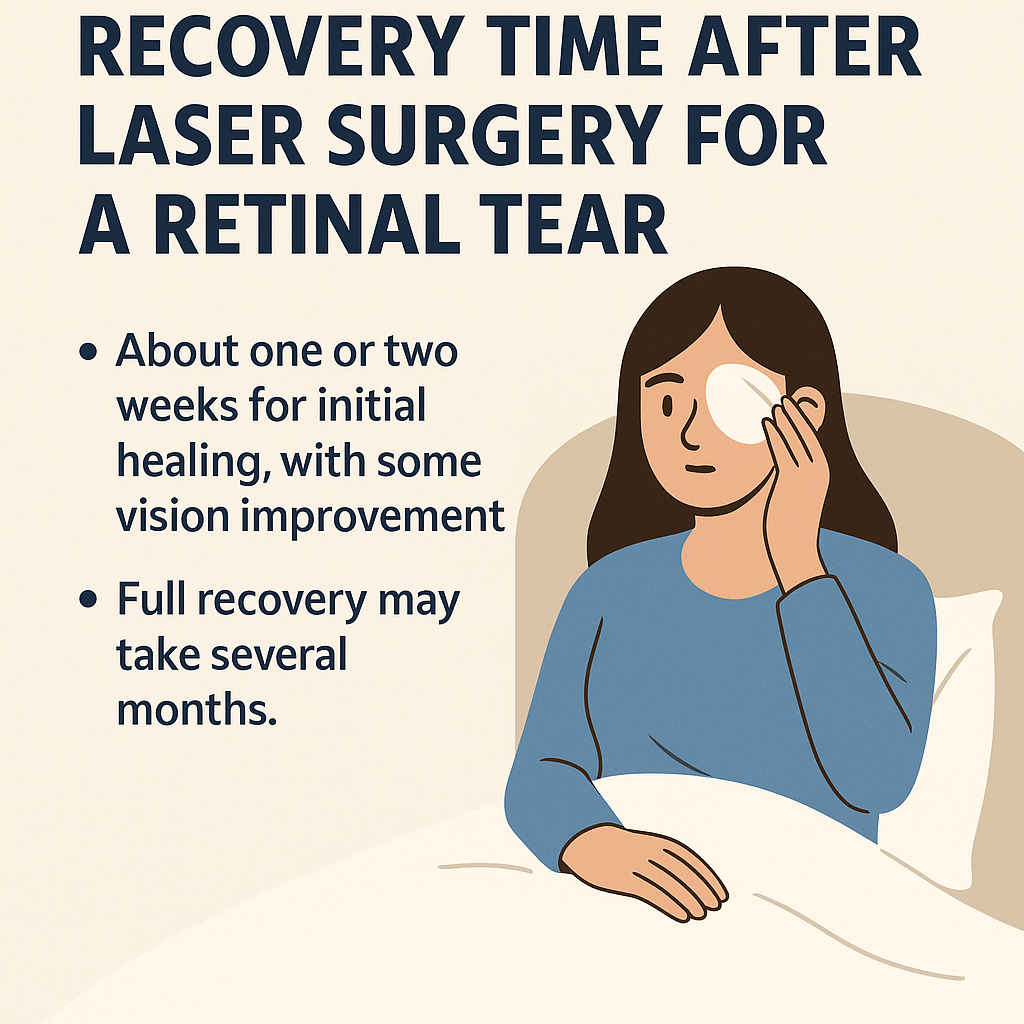
This guide explains how retinal laser works, what you may feel, what your vision may be like afterwards, and what you should and should not do while you heal.
This article is for general information only and is not medical advice.
Always follow the specific instructions given by your own eye doctor or retina specialist.
Why Laser Surgery Is Done for a Retinal Tear
A retinal tear is a small rip or hole in the thin layer of tissue at the back of the eye.
That tissue is the retina.
The retina lines the inside of the eye and turns light into signals for the brain.
When there is a tear, fluid can slip through the opening and collect under the retina.
That fluid can lift the retina away from the eye wall and create a retinal detachment.
Laser surgery is done to seal the tear.
The laser creates tiny burns around the edges of the tear.
These burns heal into scar tissue.
The scar tissue welds the retina to the layer underneath and helps prevent fluid from getting behind it.
Laser surgery does not remove the tear.
Laser surgery strengthens the edges so the tear is less likely to lead to detachment.
Explore: The Best Healthcare SEO Agencies for Doctors in 2026
What Happens Before Laser Surgery for a Retinal Tear
Most retinal laser procedures are done in an outpatient setting.
You usually go home the same day.
Before the procedure, you can expect a few steps.
Your pupils are dilated with eye drops.
This allows the retina specialist to see the back of your eye clearly.
The eye is numbed with drops or a small injection near the eye.
This reduces discomfort and helps you keep the eye still.
You may sit at a slit lamp (a microscope with a chin rest) or lie down, depending on the setup.
The doctor may place a special contact lens on your eye to focus and guide the laser.
You will likely be awake the whole time.
You may see bright flashes or spots of light during the treatment.
If you are anxious, you can tell the doctor beforehand.
They can explain each step and may offer mild medicine to help you relax in some cases.
What to Expect During the Laser Procedure
The laser procedure itself is usually quite short.
Many treatments take only a few minutes once everything is set up.
When the laser is activated, you may see bright green or white flashes.
You may feel brief pricks or a mild stinging sensation.
Some people feel small jolts of discomfort with each laser spot.
The discomfort is usually tolerable and fades quickly after each pulse.
If you feel strong pain, you should tell the doctor so they can adjust the treatment or numbing.
The doctor places a series of laser spots around the tear.
These spots form a ring or barrier of burns.
The goal is to create a continuous line of future scar tissue that will hold the retina firmly.
You may hear the clicking or beeping sound of the laser device as the doctor works.
You may be asked to move your gaze in specific directions so the tear can be treated from all sides.
Most people are surprised by how fast the treatment is.
Once the laser pattern is complete, the doctor removes the contact lens and checks your eye.
What to Expect Right After Laser Surgery
After laser treatment, your eye may feel sore, scratchy or tired.
You may have a dull ache around or behind the eye.
You may be sensitive to light for a while.
Your vision may be blurry for several hours.
The dilating drops alone can blur vision until they wear off.
The gel or fluid used with the contact lens can also make things hazy at first.
Many people describe seeing afterimages or small dark spots where the laser was applied.
These usually fade as the eye settles.
You will typically rest for a short time in the clinic.
The team will check that you feel well enough to go home.
You should not drive yourself home after the procedure, so it is best to arrange a ride.
Your doctor may prescribe eye drops to reduce inflammation or prevent infection.
You will receive instructions on how often to use them and for how long.
What Not to Do After Laser Surgery for a Retinal Tear
People often ask what they should avoid after laser treatment.
Your doctor’s specific advice is the most important, but some general principles are common.
You should avoid rubbing or pressing on the eye.
Rubbing can irritate the surface and disrupt healing.
You should avoid heavy lifting, intense exercise and sudden head movements for a period of time recommended by your doctor.
Straining can increase internal eye pressure and stress healing tissue.
You should avoid driving until your vision is clear and you feel safe behind the wheel.
Dilated pupils and post-procedure blur can make driving unsafe on the same day.
You should avoid swimming pools, hot tubs and dirty water until your doctor says it is safe.
This helps lower the risk of infection.
You should avoid skipping your follow-up appointment.
Even if the eye feels fine, the doctor needs to check that the laser scars are forming as planned and that no new tears have appeared.
If you are ever unsure about an activity, such as flying, returning to work or resuming sports, you should ask your retina specialist for personalised guidance.
How Long Does It Take the Laser to Work?
Laser burns do not turn into full scars instantly.
The healing process takes time.
In the first few days, the burns are fresh and the seal is still developing.
Over one to two weeks, scar tissue forms more completely around the tear.
The barrier becomes stronger as the scar matures.
This is why you may be asked to take it easy for a short period after treatment.
The eye needs time to stabilise.
Your doctor may schedule a follow-up visit within a week or two to see how well the laser has taken.
In many cases, laser treatment is enough to prevent detachment.
In some cases, additional laser or other procedures may be needed if new tears appear or if the original tear was very large.
Can Vision Get Worse After Laser Surgery?
It is common to worry that laser treatment will make vision worse.
Most people have temporary blur, light sensitivity and visual disturbances right after the procedure.
These short-term effects usually improve as the eye recovers.
Laser treatment can create small areas of permanent scar in the peripheral retina.
These scars may create tiny blind spots far from the centre of vision.
Most people do not notice these in daily life because the brain adapts.
The purpose of the laser is to protect vision by preventing retinal detachment.
The small risk of subtle peripheral changes is balanced against the much larger risk of losing vision from a full detachment.
If you notice sudden new loss of vision, a growing shadow, a dramatic increase in floaters or flashes after laser treatment, you should contact your doctor immediately.
These can be signs of new tears, bleeding or detachment that need urgent care.
Follow-Up and Long-Term Care
Laser treatment for a retinal tear is not the end of the story.
It is the beginning of careful monitoring.
You will have follow-up visits where your doctor examines the retina and confirms that the laser scars are doing their job.
They will also look for new weak areas or tears.
You may need regular dilated exams for the rest of your life, especially if you have high myopia, a history of tears in the other eye or other risk factors.
The most important things you can do after laser surgery for a retinal tear are simple.
Keep your follow-up appointments.
Use prescribed eye drops as directed.
Notice and report any new flashes, floaters or shadows right away.
Laser surgery is designed to lower your risk of retinal detachment.
With good follow-up and prompt attention to any new symptoms, it can be an important step in protecting your vision for the long term.
Go To Retina Central